What Is Peptide Purity And Why Does It Matter In Research-grade Peptides? Qing Li Peptide

How to choose the very best peptide?
Prior to diving into peptide treatments, it''s critical to plainly define your wellness and health objectives. Are you intending to lose weight, enhance muscle mass healing, rejuvenate your skin, or simply increase your overall energy degrees? By determining your demands, you can concentrate on peptides that many efficiently target those locations.
Liquid Chromatography Options
HPLC separates the target peptide from contaminations, evaluating purity. MS verifies the peptide's identity by gauging its specific mass. These two methods supply complementary information and are the gold standard in the peptide industry. Peptide purity means the portion of the target peptide series in a sample contrasted to impurities. It's important since pollutants can skew research outcomes, affect drug security, and compromise experimental reproducibility, making high purity essential for accurate scientific research. So, purity isn't simply a number on a certification; it's basic to success.Why Do Researchers Perform Peptide Synthesis?
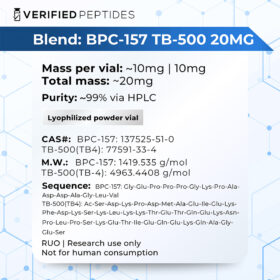
Peptide pureness testing information are mandatory in preclinical researches and must be included in investigational brand-new medicine (IND) applications and later on new medication applications (NDAs). In addition to HPLC and MS, specialized labs might employ orthogonal strategies for included accuracy. For instance, capillary electrophoresis can be used to separate really hydrophilic peptides or to verify results, and MALDI-TOF mass spectrometry can assist in mapping larger or customized peptides. Lots of peptide producers or suppliers will give a COA (Certification of Analysis), as an example our bpc 157 tb 500 blend, that consists of the pureness percentage by HPLC and identification confirmation by MS for each and every set. Top-tier labs typically report peptide pureness well above 95%, often ≥ 98-99%, by utilizing modern HPLC and MS analyses.- In the past, the range of needed fractionation for peptides (~ 100-- 6,000 Da) has had a tendency toward the low end of the fractionation capacity of business columns, developed primarily for protein separations.
- It enables the Serox team to consider not just the very first shipment, but additionally the longer technological course from initial example to reputable B2B supply from Germany.
- Such intrinsic propensity worths offer a powerful device for protein style in addition to supplying a guide to forecasting the possible conformational status of a peptide throughout chromatography.
- Evaluating retatrutide pureness prior to purchase needs a lot-specific CoA with HPLC pureness information revealing ≥ 98%, mass spectrometry identification verification matching the expected ~ 4,731 Da molecular weight, and ideally third-party testing.